
How to identify whether a gas storage tank is a simple pressure vessel?
Release time:
26 Apr,2024
Simple pressure vessels that meet the following conditions do not need to go through the usage registration procedures. Simple pressure vessels within the recommended service life do not need to undergo regular inspections according to the 'Regulations on Regular Inspection of Pressure Vessels'. However, the manufacturing unit should provide the user with a product qualification certificate, user manual, completion drawings (copies), and a manufacturing supervision inspection certificate issued by the supervision and inspection agency.
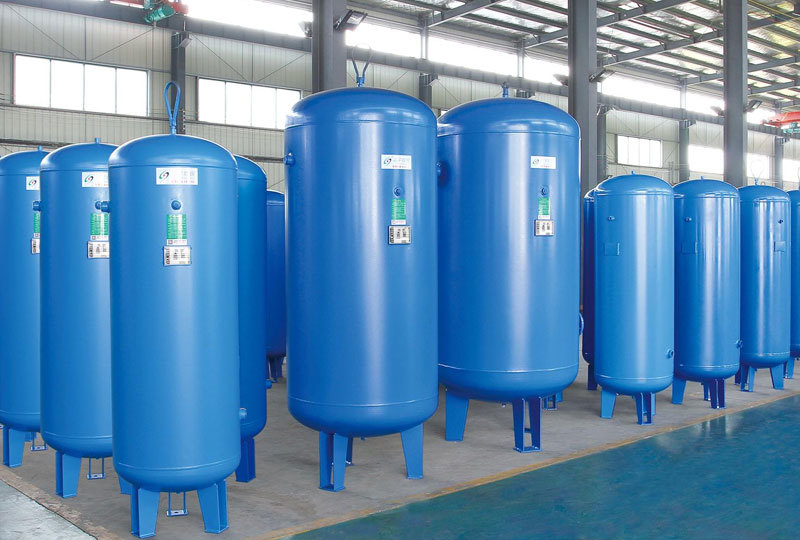
Simple pressure vessels that meet the following conditions do not need to go through the usage registration procedures. Simple pressure vessels within their recommended service life do not need to undergo regular inspections according to the 'Regulations on Regular Inspection of Pressure Vessels'. However, the manufacturing unit should provide the user with a product qualification certificate, user manual, completion drawings (copies), and a manufacturing supervision inspection certificate issued by the supervision and inspection agency. Simple pressure vessels that have reached their recommended service life should be scrapped. If continued use is required, the user unit should request the special equipment inspection and testing agency to conduct regular inspections according to the 'Regulations on Regular Inspection of Pressure Vessels'.
According to TSG R0003-2007 'Safety Technical Supervision Regulations for Simple Pressure Vessels', simple pressure vessels refer to pressure vessels with a simple structure and low risk. They are mainly applicable to simple pressure vessels that meet the following conditions:
1) The vessel consists of a cylindrical body and flat or convex heads (excluding spherical heads), or is composed of two convex heads;
2) The materials of the main pressure-bearing components such as the cylindrical body, heads, and connecting pipes are carbon steel or austenitic stainless steel;
3) The design pressure is less than or equal to 1.6 MPa;
4) The volume is less than or equal to 1000L (1 cubic meter);
5) The product of working pressure and volume is greater than or equal to 2.5 MPa·L and less than or equal to 1000 MPa·L;
6) The medium is air, nitrogen, and water vapor evaporated from medical distilled water;
7) The design temperature is greater than or equal to -20℃, and the maximum working temperature is less than or equal to 150℃;
8) Welded vessels without direct flame.
Article 43: The user unit is responsible for the safety management of the use of simple pressure vessels. Simple pressure vessels that fall within the scope of this regulation do not need to go through usage registration procedures, and simple pressure vessels within their recommended service life do not need to undergo regular inspections according to the 'Regulations on Regular Inspection of Pressure Vessels'.
Article 44: The user unit should establish a safety management file for the equipment, conduct regular maintenance and inspections of simple pressure vessels, and keep records. If any abnormalities are found, they should promptly request the special equipment inspection and testing agency to conduct inspections.
Article 45: Simple pressure vessels that have reached their recommended service life should be scrapped. If continued use is required, the user unit should request the special equipment inspection and testing agency to conduct regular inspections according to the 'Regulations on Regular Inspection of Pressure Vessels'.
Tag:
Previous Page
recommend News
Share
Hebei Guangrun Heavy Industry Machinery Co., Ltd.
Tel:+86-15801113888
E-mail:hbgrzgjx@163.com
Address: west side of TengQian Road, Niujin Zhuang Township, Mengcun Hui Autonomous County, Cangzhou City, Hebei Province

Guangrun Heavy Machinery