
The sealing form and internal structure of the gas storage tank
Release time:
26 Apr,2024
A gas storage tank is a device specifically used for storing gas. To some extent, gas storage tanks are commonly used for storing and transporting gas. During operation, they can be classified into low-pressure gas storage tanks, high-pressure gas storage tanks, medium-pressure gas storage tanks, and high-pressure gas storage tanks based on their pressure tolerance.
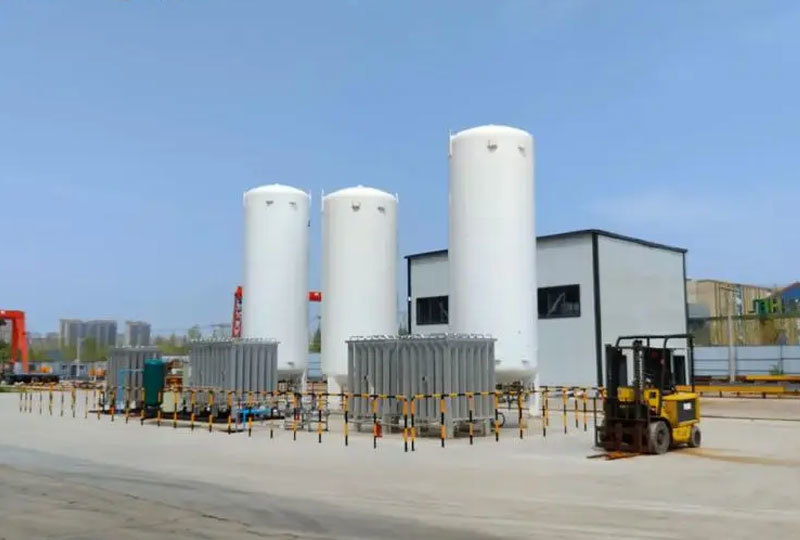
The gas storage tank is a device specifically used for storing gas. To some extent, it is commonly used for storing and transporting gas. Depending on the pressure it can withstand, gas storage tanks can be classified into low-pressure, high-pressure, medium-pressure, and high-pressure tanks.
Under normal circumstances, there are water seals between the tower sections of the gas storage tank, which effectively ensures the connection and sealing between the tower sections during operation. The lifting method of its tower sections can be either spiral guide rails or guide column types. The guide column type gas storage tank is equipped with a guide column frame composed of guide columns, cross braces, and ring beams, which have considerable rigidity around the water tank. The water tank of the gas storage tank is made of steel plates and can also be constructed using prefabricated or cast-in-place prestressed concrete. During operation, due to the heavy weight of the water in the tank, when built on poor foundations, pile foundations can be used to prevent excessive settlement of the tank body, or the water tank can be designed in a circular shape to reduce the water volume. Additionally, the water tank can be built underground, which can reduce settlement and lower the overall height of the tank body.
The body of the gas storage tank is a vertically standing cylinder welded from steel plates, with a piston installed inside. Gas is stored below the piston, and the piston will rise and fall according to the amount of gas stored. A sealing mechanism is installed around the piston to prevent gas from escaping. A weight is placed on the top surface of the piston to achieve the required gas storage pressure. The sealing methods for dry gas storage tanks include oil seal type, grease seal type, and flexible membrane seal type. The cross-section of the piston and the tank body is a regular polygon, and generally, I-shaped columns are set at the corners of the polygon. The wall panels, top panels, and bottom plates of the piston are composed of groove-shaped components pressed from 5 to 6 mm thick steel plates, providing certain bending strength and rigidity.
A truss is arranged in a radial pattern above the piston, with guide wheels installed at both ends of the truss. When the piston rises and falls, the guide wheels slide along the columns. An annular corridor is set along the entire height of the tank approximately every 15 meters. The sealing mechanism consists of an oil tank and sliding plate around the piston, filled with mineral oil to seal the gas below the piston.
Tag:
Previous Page
Previous Page:
recommend News
Share
Hebei Guangrun Heavy Industry Machinery Co., Ltd.
Tel:+86-15801113888
E-mail:hbgrzgjx@163.com
Address: west side of TengQian Road, Niujin Zhuang Township, Mengcun Hui Autonomous County, Cangzhou City, Hebei Province

Guangrun Heavy Machinery