
Under what circumstances is post-weld heat treatment required for pressure vessel welding?
Release time:
26 Apr,2024
Heat treatment is used to achieve the required mechanical properties of steel or welded joints. In particular, after hot rolling or hot pressing of steel plates, the organization or performance in the supplied state is destroyed; or by using electroslag welding (BSW) or high energy line welding, the grain size of the weld is coarsened, which can be eliminated through post-weld normalizing treatment.
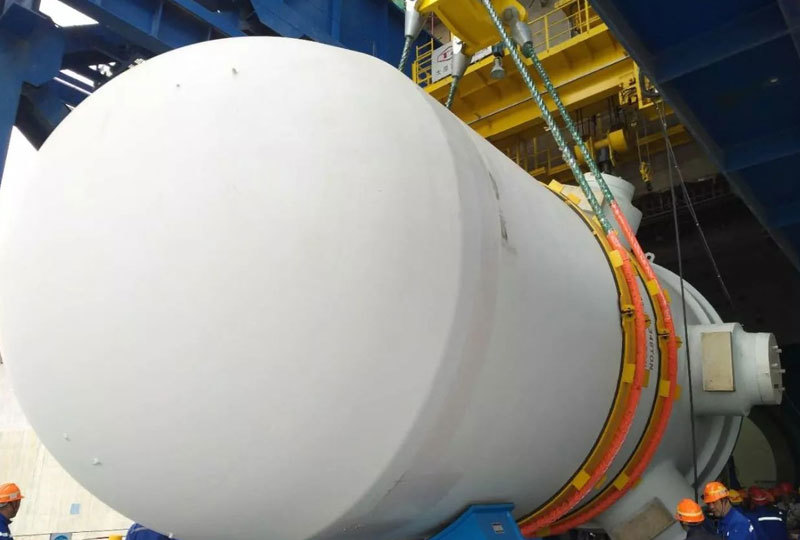
Under what circumstances do pressure vessels and pressure components need to undergo post-weld heat treatment? Now let's describe it in terms of the purpose and conditions of heat treatment.
1. The main purpose of post-weld heat treatment for pressure vessel pressure components.
(1) Eliminate residual welding stress, prevent various welding cracks and stress corrosion cracking.
(2) Eliminate cold work hardening during the cold forming process, restoring the original properties of the base material and the welded joint.
(3) Achieve the required mechanical properties of steel or welded joints through heat treatment. Especially after hot rolling and hot pressing of steel plates, which destroy the organization or properties of the supplied state; or using electroslag welding (BSW) or high energy line vertical welding, which causes coarse grains in the weld, can be eliminated through post-weld normalizing treatment.
2. Conditions for post-weld heat treatment.
National standard GB50 specifies post-weld heat treatment based on the strength and thickness of the steel, the medium of the vessel, and the degree of cold deformation of the steel.
(1) According to the strength and thickness of the steel, the conditions for post-weld heat treatment are shown in Figure 1.
(2) According to the medium of the vessel.
① The drawing indicates that the container holds highly toxic or extremely hazardous media.
② The drawing indicates containers with stress corrosion, such as those holding liquefied petroleum gas, liquid ammonia, etc.
(3) According to the amount of deformation during cold forming.
① Deformation amount for carbon steel and 16MnR: δs/Di≥3%.
② Deformation amount for other low alloy steels: δs/Di≥2.5%.
In addition to the above provisions of GB150, the 'Safety Technical Supervision Regulations for Pressure Vessels' stipulates that for ferritic materials or vertical welds with high welding line energy using electroslag welding, normalizing treatment should be performed to refine the grains. For containers holding mixed liquefied petroleum gas at room temperature, it is also stipulated that post-weld heat treatment should be carried out. Spun heads should undergo stress relief treatment after spinning, except for austenitic stainless steel spun heads.
Tag:
Next Page
Next page:
recommend News
Share
Hebei Guangrun Heavy Industry Machinery Co., Ltd.
Tel:+86-15801113888
E-mail:hbgrzgjx@163.com
Address: west side of TengQian Road, Niujin Zhuang Township, Mengcun Hui Autonomous County, Cangzhou City, Hebei Province

Guangrun Heavy Machinery