
What is the lifespan of a pressure vessel?
Release time:
26 Apr,2024
The design service life of pressure vessels is not necessarily equal to the actual service life. Here, I believe everyone can easily understand that the design service life is given under normal or ideal conditions, but the actual service life in reality can be affected by various factors.
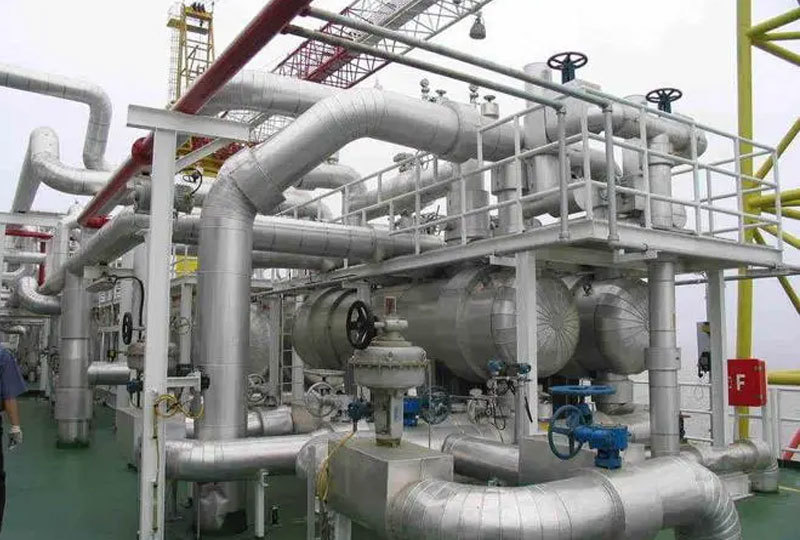
Every device has a designed service life, and pressure vessels are no exception. But what is this service life? Is it 8 years, 10 years, or 15 years, or even longer? Today, let's discuss this issue in detail.
The designed service life of a pressure vessel does not necessarily equal its actual service life. I believe everyone can easily understand this. The designed service life is given under normal or ideal conditions, but the actual service life can be affected by various factors, so there may be a difference between the two.
For chemical equipment: major devices such as towers and reactors generally have a service life of no less than 15 years, while ordinary vessels and heat exchangers have a service life of no less than 8 years.
For petrochemical equipment: the designed service life of distillation towers, reactors, high-pressure heat exchanger shells, and other components that are difficult to replace is generally no less than 20 years; ordinary vessels, heat exchanger shells, and tube boxes generally have a service life of no less than 10-15 years.
The designed service life of a pressure vessel is merely a reminder to users that when a pressure vessel is used beyond its designed service life, its safety factor will decrease, and its safety rating will also drop. At this point, necessary monitoring measures should be established, and the inspection cycle should be shortened.
Tag:
recommend News
Share
Hebei Guangrun Heavy Industry Machinery Co., Ltd.
Tel:+86-15801113888
E-mail:hbgrzgjx@163.com
Address: west side of TengQian Road, Niujin Zhuang Township, Mengcun Hui Autonomous County, Cangzhou City, Hebei Province

Guangrun Heavy Machinery