
What are the common classifications of pressure vessels?
Release time:
26 Apr,2024
The use is fixed and cannot be moved. There are many types of working media, most of which are toxic, flammable, explosive, and corrosive chemical substances. Such as horizontal storage tanks, spherical storage tanks, heat exchangers, dryers, separators, reactors, synthesis towers, shell-and-tube waste heat boilers, medical oxygen chambers, etc.
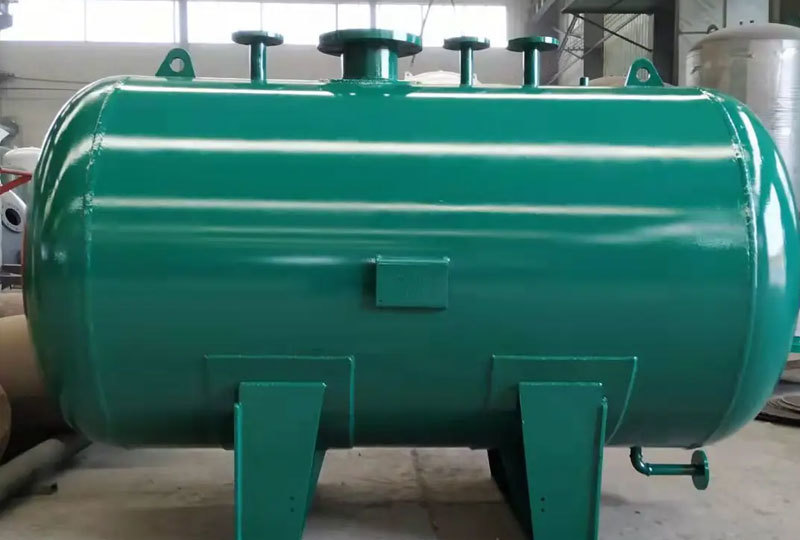
1. Fixed pressure vessels
The use is fixed and cannot be moved. The working media are diverse, most of which are toxic, flammable, explosive, and corrosive chemicals. Examples include horizontal storage tanks, spherical storage tanks, heat exchangers, dryers, separators, reactors, synthesis towers, shell-and-tube waste heat boilers, and medical oxygen chambers.
2. Mobile pressure vessels
Mainly used during transportation, serving as packaging for certain media, mounted on transport vehicles. Many working media are flammable, explosive, or toxic, such as oil tankers and railway tank cars.
3. Cylinder-type pressure vessels
As a type of pressure vessel, they are widely owned in society, including low-pressure cylinders (such as civilian liquefied petroleum gas cylinders) and high-pressure cylinders (such as hydrogen, oxygen, and nitrogen cylinders). Many working media are flammable, explosive, or toxic substances. They also have strong mobility, including long-distance transport and short-distance movement during actual use. Examples include oxygen cylinders, hydrogen cylinders, liquefied petroleum gas cylinders, nitrogen cylinders, liquid chlorine cylinders, liquid ammonia cylinders, carbon dioxide cylinders, and dissolved acetylene cylinders.
Safety accessories for pressure vessels
1. Safety valve
When the pressure inside the equipment exceeds the specified requirements, the safety valve automatically opens to release excess pressure, restoring the equipment to normal working pressure. Once the pressure is normal, the safety valve will automatically close.
After the safety valve has been calibrated, it is strictly prohibited to arbitrarily add heavy objects, move the weight, or jam the valve disc to disable the safety valve.
2. Pressure gauge
The normal working pressure is usually between 1.5 to 3 times, preferably 2 times. The range of the pressure gauge should be compatible with the working pressure of the equipment. A red line should be drawn on the pressure gauge dial to indicate the maximum allowable working pressure. The connecting pipe of the pressure gauge must not have gas or water leaks; otherwise, the indicated value of the pressure gauge will decrease.
3. Rupture disc
The rupture disc device consists of a rupture disc and corresponding support. Types of rupture discs include curved, shear, normal convex tensile, normal convex slit, and inverted arch types.
4. Temperature measuring instruments
For pressure vessels where wall temperature needs to be controlled, thermometers or temperature measuring instruments should be installed to test the wall temperature.
5. Level gauge
The maximum allowable working pressure and temperature of the pressure vessel level gauge should be selected based on the medium of the pressure vessel.
6. Pressure reducing valve
When the working pressure of the pressure vessel is lower than the pressure of the source, a pressure reducing valve should be installed on the inlet pipeline of the pressure vessel. If the pressure reducing valve cannot ensure reliable operation due to medium conditions, it can be replaced with a regulating valve.
7. Emergency shut-off device
Its function is to quickly cut off the gas source and emergency close the valve in case of pipeline operation errors, accessory rupture, or fire accidents near tank cars, preventing the spread and escalation of accidents.
Tag:
Previous Page
Next Page
Previous Page:
Next page:
recommend News
Share
Hebei Guangrun Heavy Industry Machinery Co., Ltd.
Tel:+86-15801113888
E-mail:hbgrzgjx@163.com
Address: west side of TengQian Road, Niujin Zhuang Township, Mengcun Hui Autonomous County, Cangzhou City, Hebei Province

Guangrun Heavy Machinery