
Products
Contact Us
Phone:+86-15801113888
E-mail:hbgrzgjx@163.com
Address: west side of TengQian Road, Niujin Zhuang Township, Mengcun Hui Autonomous County, Cangzhou City, Hebei Province

Three-phase separator
Classification:
- Product Description
-
The oil and gas three-phase separation metering device integrates heating, separation, testing, and metering, mainly used for the three-phase separation of oil/gas/water from oil wells or gas wells. It separates liquids from gases and also separates oil from water in the liquid. Therefore, customers are accustomed to calling it a 'gas-liquid separator' or 'oil-gas-water three-phase separator.'
1. Three-phase separator components and internal structure
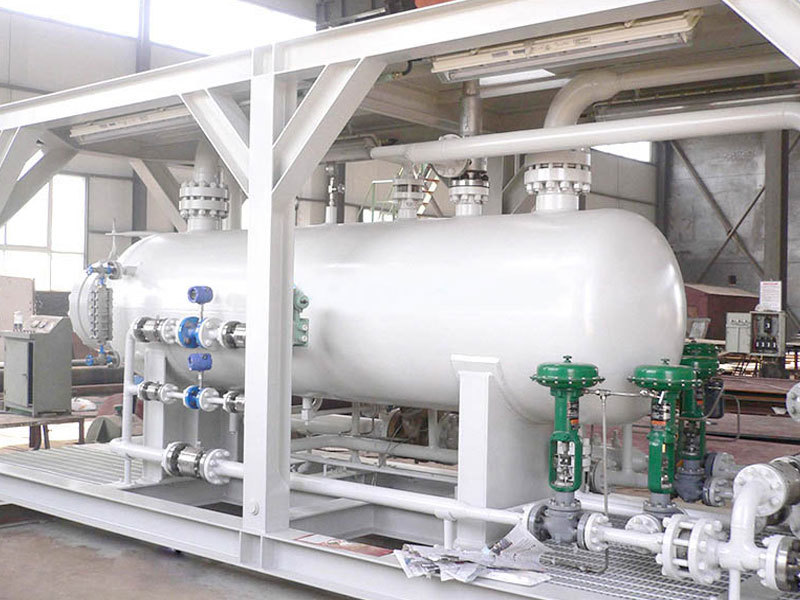
The difference between a three-phase separator and a two-phase separator is that the three-phase separator must be equipped with a weir plate. The weir plate is a partition with a certain height, installed at the end of the separator. In addition, the interior of the three-phase separator is usually equipped with an inlet diverter, a mesh demister (mist eliminator), and a corrugated coalescing plate, among others. Our natural gas three-phase separator is integrated into a skid, combining the separator and heater, and is equipped with high-quality orifice flow meters, level gauges, pressure control valves, advanced control systems, etc., which need to be customized according to customer requirements.
2. Working principle of the three-phase separator:
The working principle of the natural gas three-phase separator is gravity separation, which achieves effective separation of oil-water, oil-gas, or oil-gas-water based on the density differences of various substances. In the oil-water separation process, the oil-water mixture enters the separator through the inlet, passes through the inlet diverter and the gravity settling zone, where the oil, due to its lower density, gradually rises, while the water gradually descends, and gas typically forms bubbles at the top and rises to the top of the separator.
With the help of the weir plate, the oil accumulates above the water and flows over the weir plate into the oil outlet pipeline, while the water flows out through the water outlet at the bottom of the container in front of the weir plate. The gas at the top is discharged into the environment through the gas outlet, and sometimes it also needs to be further processed through a gas treatment unit.
3. Selection of three-phase separators: Horizontal separator vs. Vertical separator
The assembly forms of three-phase/two-phase separators are mainly divided into vertical and horizontal types. Currently, the commonly used form in the domestic market is the horizontal separator.
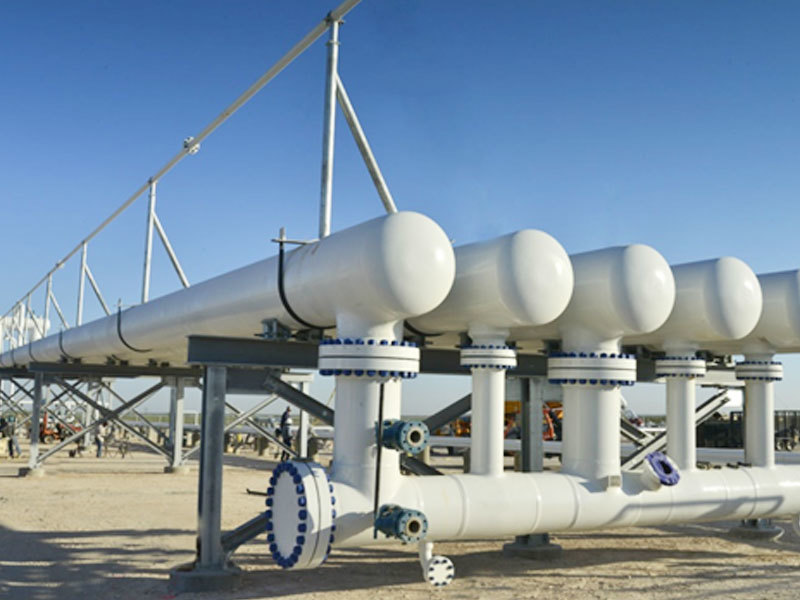
The horizontal separator has a horizontal structure, with its container shell axis parallel to the ground. It is usually used for processing fluids with a large liquid/gas ratio or for liquid/liquid separation. Compared to vertical separators, the horizontal flow cross-sectional area for liquid flow is larger, and the vertical section for gravity separation of liquids with different densities is shorter.
The horizontal separator has a larger contact area with the ground, thus it is not affected by wind. Its advantages include stable structure and convenient operation.
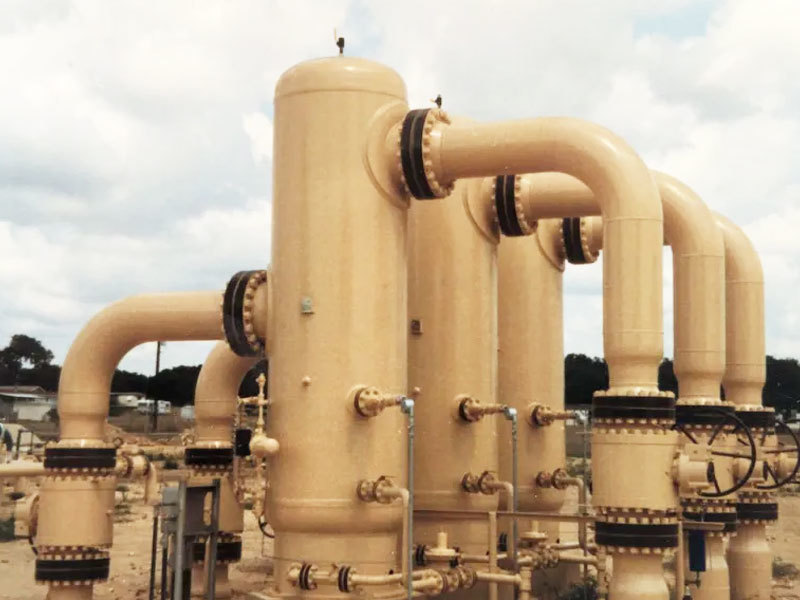
The vertical separator is set in a vertical form, meaning its shell axis is perpendicular to the ground. In contrast to horizontal separators, the vertical separator has a smaller contact area with the ground, making it less resistant to wind and less stable, so the wind environment needs to be considered during selection. Its advantages include a small volume, less land area, and space-saving.
Whether it is a horizontal separator or a vertical separator, both can be used for testing separators, production separators, two-phase separators (liquid-liquid/oil-water separators), three-phase separators (oil-gas-water separators), and special application separators.
Tag:
Product inquiry
Hebei Guangrun Heavy Industry Machinery Co., Ltd.
Tel:+86-15801113888
E-mail:hbgrzgjx@163.com
Address: west side of TengQian Road, Niujin Zhuang Township, Mengcun Hui Autonomous County, Cangzhou City, Hebei Province

Guangrun Heavy Machinery