
Products
Contact Us
Phone:+86-15801113888
E-mail:hbgrzgjx@163.com
Address: west side of TengQian Road, Niujin Zhuang Township, Mengcun Hui Autonomous County, Cangzhou City, Hebei Province

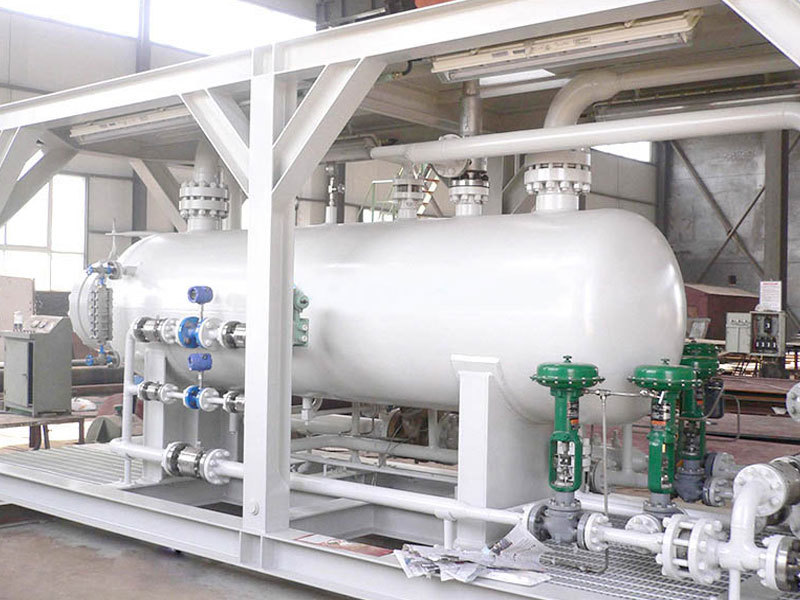
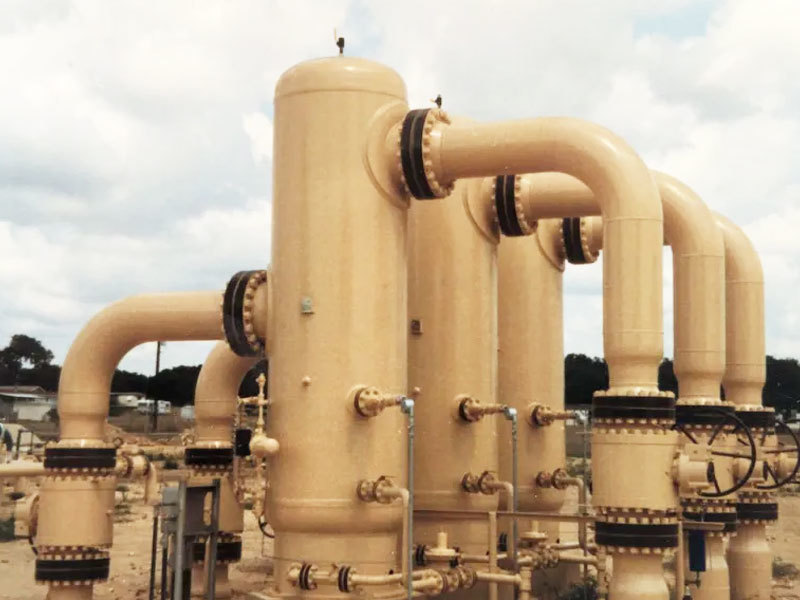
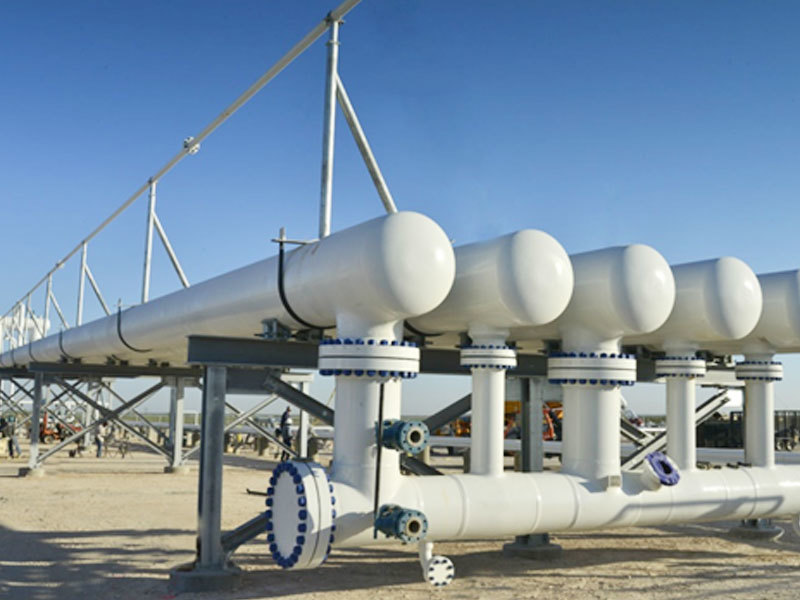
Gas-liquid separator
Classification:
- Product Description
-
1. Equipment Description
◈ The gas-liquid separator, also known as a mechanical separator, is used to remove a large amount of liquid and solid from gas, and is classified as a pre-filtering device.
◈ According to the characteristics of the internal components, the gas-liquid separator has the following forms: cyclone tube type and blade type.
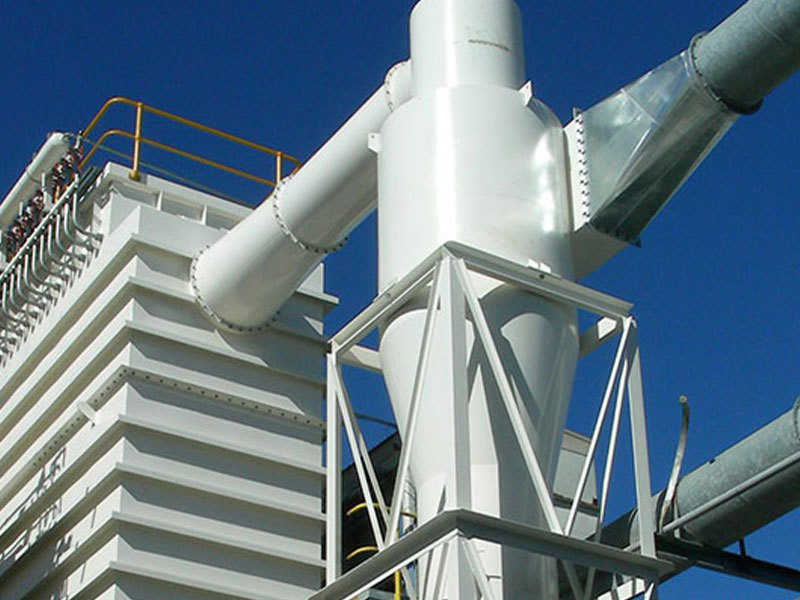
◈ Cyclone tube gas-liquid separator: When the liquid-containing gas flow enters the gas-liquid separator, due to the design of the rotating vortex inside the cyclone tube, the gas flow generates strong vortex motion, thus forming a strong centrifugal force that causes solid particles and liquid impurities to adhere to the wall of the cyclone tube. After the impurities are separated from the gas flow, they accumulate in the liquid accumulation area of the container. The purified gas then exits the cyclone tube separator with minimal pressure loss, making this device highly efficient, with a large processing capacity and reduced pressure.
◈ Blade type gas-liquid separator: It captures droplets through a special blade device. Under the action of this device, the droplets in the gas flow continuously change their direction of motion and are separated from the gas due to centrifugal action, condensing on the surface of the blades or settling in the blade grooves. A large amount of liquid is discharged along the channel formed by the blade grooves into a buffer area formed by specific baffles, and then gradually accumulates in the liquid accumulation area at the bottom of the device, finally being discharged from the equipment.2. Working Principle of the Cyclone Tube
◈ The cyclone tube consists of 4 separation sections.
◈ The first separation section contains a mechanical rotor that guides the gas entering the cyclone tube to generate high-speed rotation.
◈ The second separation section is the first part of the separation area. This area has two openings, and due to the relatively high centrifugal force generated by the rotating rotor, the impurities in the gas flow are thrown to the inner wall and eventually reach the lower end of the separation section, where they are expelled from the cyclone tube. The pressure drop generated by the gas attracts the expelled gas back to the top of the first separation area, re-entering the cyclone tube.
◈ The third separation section is the second part of the separation area. It operates on the same principle as the first separation area. Due to the smaller diameter of the second separation area, the speed of the gas flow increases, thereby increasing its centrifugal force.
◈ The last separation section is the discharge pipe, from which clean gas is expelled from the cyclone tube.3. Equipment Features
◈ Efficiently removes a large amount of liquid carried by gases such as natural gas, making it the preferred pre-separation device.
◈ Diverse separation components and internal structures can meet various working condition requirements.
◈ Accurate pressure drop calculations effectively reduce energy loss.
◈ Detailed design enhances the convenience of operation and maintenance.
◈ High efficiency, large processing capacity, and reduced pressure.
◈ Low equipment cost and easy operation.4. Equipment Applications
◈ Removing a large amount of liquid from pipelines.
◈ Wellhead pre-separation.
◈ Removing liquid hydrocarbons from raw gas.
Tag:
Product inquiry
Hebei Guangrun Heavy Industry Machinery Co., Ltd.
Tel:+86-15801113888
E-mail:hbgrzgjx@163.com
Address: west side of TengQian Road, Niujin Zhuang Township, Mengcun Hui Autonomous County, Cangzhou City, Hebei Province

Guangrun Heavy Machinery